Wednesday, October 21, 2015

#78 How Much Does the Entire Internet Weigh?

The data we upload on the web, the information we share, the chats we do with our friends and every other key typed and every mouse click – everything makes the internet a more vast and complex place.

    PowerTech & Powertechmation: How much does the internet weigh? No more spoiler here. Read more and find out.

And, they also continue to make our internet a “heavier” place. So, how much does the internet weigh? How much would all the data on the internet at any one moment weigh?

I was watching random videos on YouTube and I came across this amazing video on Vsauce, a YouTube channel. The video describes and calculates the weight of the internet, after taking the inspiration from reports that indicate that each book loaded onto Amazon Kindle e-reader makes the tablet slightly heavier.

There are lots of theories on the internet that calculate the weight to be as small as a fat strawberry- and some claim it to be as light as a tiny grain of salt.

Using Einstein’s formula e=mc², Professor John Kubiatowicz, a computer scientist at the University of California, Berkeley, calculated that filling a 4GB Kindle would increase by 0.000000000000000001 grams.

The Internet runs on electrons and that’s how data is stored. These electrons weigh very less. To make an ordinary email of 50 KB, it takes about 8 billion electrons. This sounds like a big number, but it weighs just “two ten-thousandths of a quadrillionth of an ounce.”

In the video below, Vsauce explains how the entire internet weighs about 50 grams. These calculations are based on a decade-old data, but it gives us a rough idea. Every year, more and more servers are added, the internet gets a few grams heavier.

Watch it here:


Did you like this video? Have something to add? Tell us in the comments below.

#77 How to Build Weather Satellite Images Receiver With $20 Dongle

This “how-to build weather satellite images, recover” is based upon the Matt Gray’s project on receiving weather satellite image with £8 dongle. Matt Gray is the one who developed image. He is also a part of the famous YouTube video channel “The Technical Difficulties.”


He found out that you can get weather satellite images directly from the satellite when they pass overhead, by just using a $20 review dongle and thus you can build your own weather satellite image receiver!. He received his first image on his 4th attempt.

NOAA 15 northbound 90E at 25 Jul 2015 16:39:04 GMT on 137.62MHz, MSA enhancement, Normal projection, Channel A: 2 (near infrared), Channel B: 4 (thermal infrared)

How to build your own weather satellite image receiver?

According to Matt, several American NOAA weather satellites in a polar orbit around the Earth, each of which will pass the same point below every 12 hours or so. The satellites transmit pictures via FM radio at 137MHz. Using a DAB/FM/Freeview dongle, you can receive this signal on a computer running software-defined radio (SDR) software, and then decodes it into a picture to make your own weather satellite image receiver.


Requirments

Following things are needed to build a weather satellite image receiver at home-

  • A Nooelec R820T USB Dongle ($21 on Amazon).
  • CubicSDR to tune and receive the signal.
  • Soundflower to pipe audio out of CubicSDR into:
  • WXtoIMG which automatically records when the satellite should be overhead, then decodes and processes the image. It will also tell you when the satellites are overhead next.
  • A 2 meter bit of wire jammed in the screw hole at the base of the tiny antenna (not the MCX connector), in a vain attempt to have something slightly more tuned to 137MHz.


Method to build your weather satellite images receiver:

1.Go outside. You’re trying to pick up a signal from space to make your own weather satellite image receiver. You need as few things in the way as possible.


2.Open Soundflower

3.Open CubicSDR
  • Tune to the satellite’s frequency (137.xxMHz) with a bandwidth of 36kHz.
  • Set audio output to Soundflower (2ch)
4. Open WXtoIMG
  • Make sure the soundcard is set to Soundflower (2ch) in Options->Recording Options
  • File->Update Keplers if you’ve never done it before, so it knows where the satellites are
  • File->Satellite Pass List will tell you when to expect the pass


5. Set WXtoIMG to auto record File->Record

6.Watch CubicSDR until you see the data lines fade in.
  • If the lines aren’t centered, drag it in the top left window until they are. They will drift over time (This is probably due to the Doppler effect).

7. For me, an image faded out of the noise on WXtoIMG when the satellite was above 20 degrees, and looked best once it had reached the highest point and was on its way back down. (I’m assuming this is due to buildings/etc. blocking the signal).

8. If the signal was good enough, WXtoIMG will process  it. Enhancements->MSA Multispectral Analysis made it look like a  color photo.

You might be able to receive other things with this setup like FM Radio, ADS-B – The signal planes broadcast to say where they are and how fast they’re going or Air Traffic Control signals.

Let us know in the comments what did you get after building this weather satellite image receiver

#76 Apple’s iRing: New patent reveals a wearable ring

New patent reveals Apple is working on a smart ring with a built-in display

Apple has designed a smart ring, which could be the next piece of wearable tech from the Apple Watch maker.


The patent application known as “Devices and methods for a ring computing device” published by the U.S. Patent and Trademark Office on Thursday, discloses that it carries the description of an advanced ring-style wearable that will depend on a number of inputs such as voice, motion and touch input in order for the user to control and interact wirelessly with other computing devices. This “Apple ring” would be packed with a rechargeable power source, such as a battery.


The patent in many ways reads more like an overview of an Apple Watch but in miniature form, or those that could be added to the Watch in the future. It explains that when worn on an index finger, one could conceivably operate the ring’s touch sensitive surface with a thumb. However, to make things easier, the document also describes a mechanism similar to Apple Watch’s Digital Crown. Another option of built-in accelerometer and gyroscope modules are provided to accept gesture input with enough precision to facilitate handwriting capture. A user might even wear two rings to control multiple aspects of a host UI.
In some iterations of the invention, Apple proposed design sports microphones for voice commands, much like Apple’s new Siri Remote for Apple TV. It also has two force feedback motors to communicate various notifications and directional information. External devices such as a computer’s mouse cursor, a camera’s shutter or a vehicle’s entertainment and climate control system can also be controlled by using the ring. It could be used as an external controller for gaming.


Though nothing has been specifically mentioned, the ring could save power by unloading voice processing to a remote device, a tactic that is adopted by the Watch. In fact, Apple’s application suggests using a keyword to trigger voice dictation, suspiciously similar to Watch’s “Hey Siri” feature and an always-on iPhone 6s version powered by Apple’s M9 motion coprocessor.

Further, Apple says users could draw characters on the ring’s touchscreen, which would then be sent out to a paired external device, such as an iPhone. The addition of a biometric sensor for sensing biometric information of the user and/or a near-field-communication transmitter for transmitting data related to the user could also allow Apple’s ring to be used in a similar manner as Touch ID for user authentication and Apple Pay mobile payment authorization. Other iterations of the product propose a built-in camera.

A wearable ring isn’t necessarily out of the domain of other technology companies. One startup called Ringly, makes a line of smart jewelry and rings that light and vibrate to notify its wearer of incoming calls, messages and app alert.

The description of the invention may not necessarily reflect how the final product will look like, as this is not a design patent. At this time, it is unknown when Apple plans to bring an Apple Ring to market, considering that this is a patent application.

Originally, Apple filed the patent application on April 1, 2015 and credits designers Marcos Regis Vescovi and Marcel van OS as the inventors. It relates to a separate unpublished application filing from 2014.

#75 TPP Agreement Could Be The Worst Possible Thing To The Internet

The Trans-Pacific Partnership deal, or TPP, which had been pushed on for several years and hailed as the 21st-century pinnacle for trade liberalization, is set to threaten the Internet sovereignty as well as the world wide web’s liberty. The campaigners against the TPP are questioning the secret negotiations being part of the deal in almost all its areas including the principles of information sharing.

PowerTech & Powertechmation: The landmark TPP agreement has been announced by the trade     ministers in Atlanta. But the pact is causing a serious concern over infringement of the Internet principles among the people.

The TPP deal, which has been announced on Monday at a press conference in Atlanta will supposedly cover 40% of the world’s economy and claims to create a unified economic bloc.
The proposal in the pact makes it a crime to reveal any violation by the corporation through a computer system. That means no more whistle-blowing and no responsible journalism on the subject anymore.

A big headache for the startups and individuals, the TPP requires the content providers such as YouTube and Facebook to take down the content on a single complaint. This would further increase the monopoly of certain groups over the Internet and copyright violations for a minimum of 120 years for corporate generated content choking small-time innovators.

Also, the ISPs are asked to monitor the users under the TPP agreement to scout for any infringement of the new law of the Internet, subsequently cutting you off from the service of the user-generated content.

Most of the stringent rules have been taken from the US copyright laws and would serve as a nightmare in the countries partaking in the deal.

The US Congress has time and again been approached by the tech experts to be more transparent in the deal, but to no avail.

Stay updated on the Internet infringement laws with us on PowerTech & Powetechmation.


Tell us your opinion on the TPP agreement in the comments below.

#74 This Amazing Retro Mini Apple Computer Is Based on Raspberry Pi

Here’s a miniature Apple computer that looks adorable and runs on our favorite DIY companion Raspberry Pi and its Debian-based OS Raspbian. Charles Mangin is the person who created this as it’s his hobby to create miniature retro computers.

 PowerTechknowledge & Powetechmation Charles Mangin has created an amazing retro mini Apple computer that runs on Raspberry Pi and Raspbian OS. You can buy it online or 3D print its parts by downloading its files.

This Apple Computer is way cheaper that the other Apple computers. You can either buy it online or build it yourself by downloading the specifications.

The mini Apple computer printed by him, features a USB plug-in and a working 2.5″ LCD display. This also comes with a combo A/C plug on the back along with a micro-SD card.


The files can be downloaded from Thingiverse from the Apple IIc Raspberry Pi case – Model A+ and the Apple Monitor IIc – 2.5” LCD. Mangin himself prints, assembles, paints and sells these parts at Etsy.

Mangin also hints that he’ll be eventually making working miniature mouse and keyboard as well.

#73 Computer Program ‘Helium’ Fixes Old and Rotten Code Faster than Expert Engineers

Do you know the meaning of term software rot or bit-rot? It’s the gradual deterioration in the performance of a software and its responsiveness that makes it slow, outdated and unfit for use. Over the time, heaps of code gets accumulated and it becomes less difficult to understand due to the hardware upgrade. For about the past 12 months, MIT computer scientists and engineers from Adobe are working together to solve this software rot problem faced by all major companies.


Adobe’s Photoshop photo editor is one of its most popular products and over the years, it has faced similar rotting problems. For image-processing, the code must be high-performance and you have to optimize it heavily. But as time passes by, same code becomes less effective as its environment changes (new hardware). An MIT professor and a researcher at the Computer and Artificial Intelligence Lab (CSAIL) Saman Amarsinghe calls this “a billion-dollar problem” as companies have to test the code every few years manually and develop “healing” patches for it.

So, the genius minds at MIT and Adobe thought why not make a computer program that would automatically fix old codes.

CSAIL developed Helium, a system that repairs the code in a few minutes or hours without needing any manpower or the original source. There’s one particular type of the computational kernel popular in proprietary software like Photoshop – the “stencil kernels” – that allow operations on entire areas of pixels. They are the ones responsible for huge consumption resources, and as the environment changes due to the new hardware, their performance degrades.

The Helium system replaces the rotten software components with optimized ones. It was found that the Helium system could perform this task in one day that human engineers took three months to complete. As a result, some Photoshop filters saw a 75 percent increase in performance, whereas, the performance of less optimized programs like Microsoft Windows’ IrfanView saw a jump of 400-500 percent.

According to experts, the Helium system is a new and innovative approach to software rot that addresses the high-level descriptions of stencil computations and it could be ported to machine architecture of the future.

Comment down your views about the Helium system developed to solve the bit-rot problem.

#72 “You Can Hack a Computer Just by Looking at It” – HP Explains Visual Hacking

Visual Hacking is a relatively new term that you need to add in your jargon. When I’ll tell you its meaning, you’d even refuse to accept that it’s some kind of “hacking.” But, as the security threats are increasing, visual hacking is becoming a terrifying issue and we need to take some basic steps for an effective security.


According to the genius minds at HP security division, if someone is able to read what’s on your screen and it’s not intended for that person, it falls in the category of “visual hacking”. After stealing some information by visual means, the act of owning someone’s digital life becomes much easier.

“With more and more PCs being used in public places, visual hacking — the act of collecting confidential information by looking at someone else’s screen — is a paramount security risk in today’s business environment,” says an HP executive.

Read about: World’s First $9 Computer CHIP is Shipping Today

In today’s busy and competitive world, laptop users are not aware of the fact who is looking over their shoulders. This is a way to gather credentials by observation and thus visual hacking becomes a greater threat. As shown in a recent research conducted by HP and 3M, about 90% of the attempts to steal business information were successful using visual hacking methods. The stolen data included employee login and access passwords, contact lists, consumer data, financial information etc.

To curb this menace, HP has partnered with 3M to deliver the solutions that protect the privacy of a user and improve the security measures by protecting the secrets of a billion-dollar company. The company has launched a collaboration to incorporate 3M privacy screens in the HP’s notebooks that are more focused on security.

HP and 3M have announced the use of a “screen darkening technology that protects your screen from prying eyes on either side.” Basically, it’s a dark plastic that restricts the viewing angle.

This highly successful visual hacking method is a security aspect that goes unnoticed a number of times. But, as mentioned above, its success rate increases the security threats to an alarming level.

In the future, we hope that visual hacking would be taken more seriously as a security threat and all the device manufacturers will employ effective solutions to curb it.

Have something to add? Tell us in the comments below.

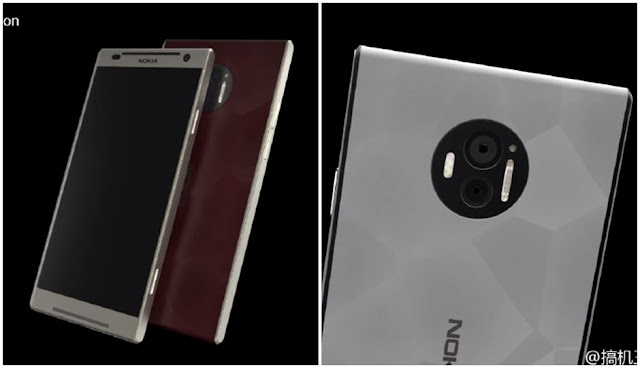
Nokia C1 renders leak ahead of launch, hints at 4GB RAM and dual rear cameras

Is Nokia working on its own AI assistant for smartphones? Nokia is planning its return to the smartphone industry with two new flagshi...