Showing posts with label Camera. Show all posts

Tuesday, February 24, 2015

#19 Canon PowerShot SX520 HS Review

Zoom into perfection


PROS
  •     Wide focal length range
  •     Good noise reduction and focusing speed
CONS
  •     Misses a few features from the previous version
  •     Unimpressive Auto mode 

Our Verdict
There is a range of bridge cameras in the market today and the Canon PowerShot SX520 HS feels like just another addition. However the performance of the camera is quite impressive, especially the 42x zoom capability. This is a great camera for hobbyists and people who want to learn the basics of photography. 


Canon has upgraded the SX510 HS with a brand new model with a much higher zoom capability but also a larger size. We took the new SX520 HS for a spin to see if the upgrade is actually any good.
  

FEATURES
The new PowerShot SX520 HS has a better 15.9MP CMOS sensor which is a bump from the previous gen and it also has a larger 42x optical zoom lens which offers a focal length of 24-1008mm. There is a further 84x digital zoom as well, which is, to be honest, overkill and an unnecessary addition. The aperture range is f/3.4 to f/8 on the widest focal length and f/6 to f/8 on the highest focal length. For low light performance, the camera offers an ISO range of 100 to 3200 which is pretty good for low light shots. Sadly, you don't get the low 80 ISO like the previous version.


One big feature that we miss is WI-Fi as Canon has surprisingly removed this feature from the upgrade. Another feature that has been omitted is the slow-mo video mode so now you only get 1080p videos at 30fps. 


BUILD AND DESIGN
 
The SX520 HS feels a lot like its predecessor, but is now a bit larger and a bit heavier. It is still, however compact enough to carry around on your vacation if you don't like carrying a bulky DSLR. The camera is all plastic with a matte that offers some grip. The lens, however feels stronger as it has a metal ring around it to offer protection. Just like the SX510, there is an inbuilt flash which only pops-up automatically in the Auto mode, otherwise you need to manually open it. 


Next to the flash, you have your usual set of buttons including the shutter release button with a sliding ring to control your focal lengths, the power button and the mode dial which feels sturdy although it isn't the smoothest. At the back there is a 3-inch display which is the same as the previous gen camera. The back also a bunch of control buttons including a dedicated recording button, an exposure compensation/delete button, a playback button, the menu button and the drive control button. There is also a 5-key D-pad, but Canon has removed the rotating wheel which was present on the last model. The D-pad includes controls for flash, ISO, focus modes, etc. On the right side there is an A/V our digital port and an HDMI out port protected under a rubber flap. The bottom has a standard tripod socket and the plastic panel which opens to reveal the battery and the SD card slot.


Comparing the new SX520 to the SX510, the former feels larger, but somehow seems to offer a lesser functionality. However the overall build and quality is quite appealing. 


PERFORMANCE
 
The camera has definitely improved on the auto-focusing system and although it isn't the fastest, it is still pretty good in its price-range. You also get a manual focus option which isn't the fastest solution, but it's always nice to have. The auto exposure is somehow not very impressive as it tends to overexpose the pictures and we suggest you use any of the manual modes instead. The colours are quite accurate and even noise reduction has been implemented well. The auto white balance is also quite accurate and the different presets can be useful at times.

The best feature however is the large focal length coverage. With a 42x zoom range, you can shoot far off subjects with ease. In broad daylight, the pictures on the maximum focal length come out looking pretty good. Canon has improved on the auto-focus on the highest focal length, which was an issue with the last model. 

Video performance is pretty good and the video quality is impressive. Noise is under control, but there aren't a lot of controls to tweak the video. The various video resolutions include 480p @30fps, 720p @30fps and 1080p @30fps.


CONCLUSION
 
If you want a super zoom camera at a budget, then the SX520 HS is a great recommendation. While Canon has upgraded the zoom capability, auto-focus and noise reduction, it has committed some really useful features like WI-Fi and the rotating d-pad wheel. With that said, the camera is actually quite a good investment for everyday shooting. An alternative option could be the Nikon Coolpix P530.
Zoom into perfection

Zoom into perfection

Thursday, February 19, 2015

#8 Camera- Sigma DP2 Quattro (Review)

Sigma DP2 Quattro Review

Too niche for comfort


PROS
  •  upto 39MP interpolation
  • Sharp Images
  • Good build quality
  • Foveon sensor
 
CONS
  • Images unusable at low-ISO
  • Slow focus time
  • Terrible ergonomics
  • Slow image recording on SD card
  • Costly


    Our Verdict 
    Captured images have good dynamic range and showcase the potential of the sensor. The Sigma DP2 Quattro, in our opinion, can only perform well in the hands of an experienced or extremely conscientious photographer who knows exactly what he’s doing. It’s not something we’d be able to recommend, especially not at this price.

    Photography used to be an art form that required a great deal of patience and care, as opposed to the currently popular click-and-hope-for-the-best philosophy. During the days of film, the kind of photos you could take depended on the type of film that you used. Digital cameras changed all that by offering a degree of flexibility that was unmatched, but that flexibility was limited to more expensive cameras. Nowadays, however, with DSLR prices falling into the sub-Rs. 20,000 marks and the marked improvement in smartphone cameras, we’re no longer even restricted by price.

    The SIGMA DP2 Quattro seems to be taking the diametrically opposite path to what was expected. The images from the DP2 are simply stunning in good light. There’s a level of detail that we’re hard pressed to find in even the most expensive of DSLRs and the dynamic range that’s captured is only rivalled by the film and good HDR photography, especially in direct sunlight.

    That said, in anything other than ideal light and low-ISO (low being ISO 100), the images are so noisy as to be unusable. Even at ISO 250, noise is very apparent and it only gets worse from that point on. High-ISO images are so noisy that many-a-time it’s hard to differentiate between a fuzzy webcam and the DP2 Quattro.


    The sensor is actually a 29MP sensor, but the DP2 can interpolate that to give you 39MP and given how sharp the lens is, not a pixel is wasted. The lens itself is a little slow for a fixed lens, at f/2.8, and is absolutely tiny, despite the size of the outer casing. But the size belies its potential. Once you focus, which is definitely slower than we were expecting, but on par with a regular compact camera, the images are very sharp and detailed and detail on objects even at 100 feet away is readily apparent. You also get to switch between a multitude of focus points at the flick of a switch, which is nice.


    One odd thing about the images is that while the captured dynamic range is good, there’s no room for error in the sense that you can’t recover detail from overblown or dark areas the way you can with a DSLR or, for that matter, many other decent film cameras. We suspect that this is an artefact of the sensor design, which overlays lighting information on the colour information to provide a complete image rather than having each pixel gather that data individually.Either way, your images have to be perfect, there’s little scope for editing later on. Obviously, this camera can only perform well in the hands of an experienced or extremely conscientious photographer who knows exactly what he’s doing.


    Image quality aside, the ergonomics are suspect and the speed, terrible. The camera seems to be designed with the intention of looking different, rather than for serving a functional purpose. While the button placement is good, the grip is awkward and the camera is uncomfortable whether it’s used with one hand or two. It’s also larger than a compact camera and smaller than a DSLR, but neither more comfortable than the former nor easier to pack than the latter.Even worse is the fact that the camera takes up to 4 seconds to record an image to the SD card, and we’re only talking about a 12MB JPEG here.


    The build quality is quite good, you feel like you’re holding an expensive camera, but even disregarding ergonomics, there are other design decisions that seem awkward, such as the battery cover that doesn’t automatically lock or the stiff rubber on the SD card slot.


    The Foveon sensor is as temperamental as ISO 100 film, but the output is almost as good. This camera is, in our opinion, only a showcase for the potential of the sensor. It’s not something we’d be able to recommend, especially not at this price.Slap this sensor onto an SLR or good mirror less body and work on the high noise levels and SIGMA just might have a winner on their hands. But not yet. The camera can be rewarding, but it’s too expensive and too limiting to be worth the effort.

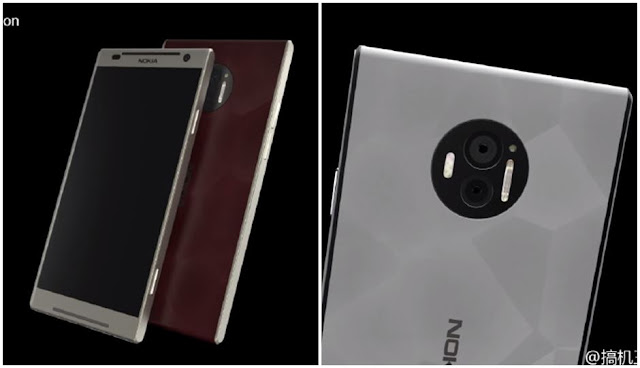
Nokia C1 renders leak ahead of launch, hints at 4GB RAM and dual rear cameras

Is Nokia working on its own AI assistant for smartphones? Nokia is planning its return to the smartphone industry with two new flagshi...